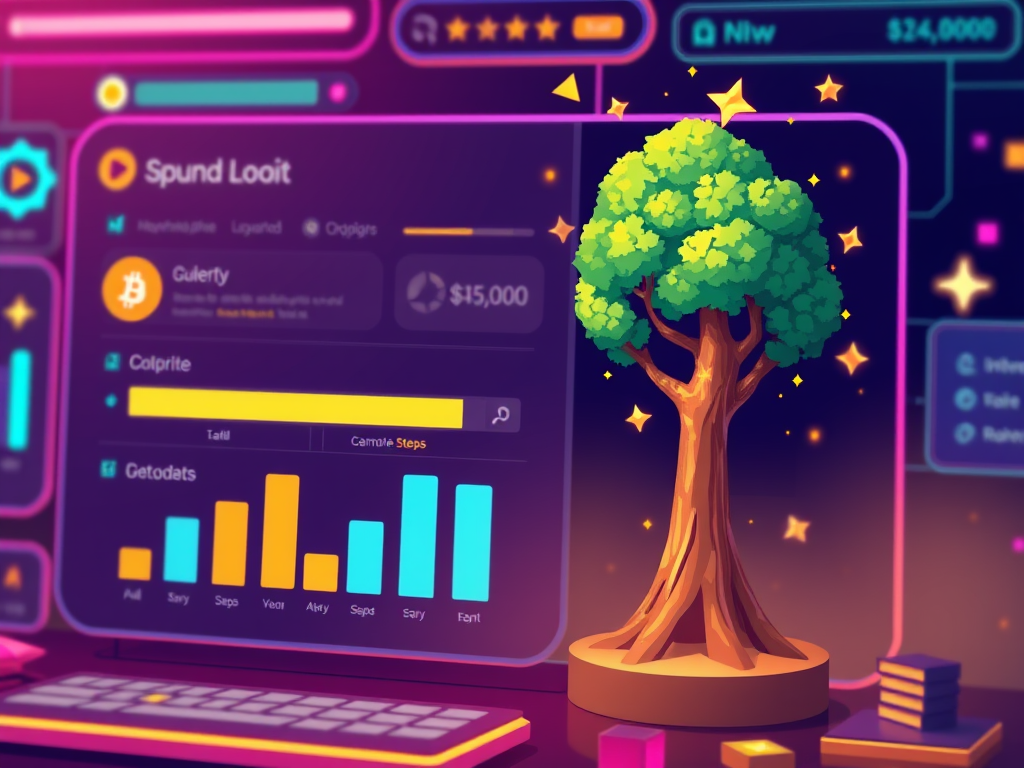
Picture this… a complex crypto staking feature that initially saw low user engagement. The staking process involved multiple steps, and users seemed intimidated. By introducing a gamified interface with progress bars that visually filled with each completed step, a virtual “seed” that grew into a “tree” as staking rewards accumulated, and small, celebratory animations, this feature transformed from a chore to an engaging experience. Users began staking more frequently and for longer durations, driven by the visual feedback and a sense of progression and achievement. This demonstrates how gamification can convert a technical and potentially tedious activity into an addictive loop.
Core Game Mechanics for Crypto/AI
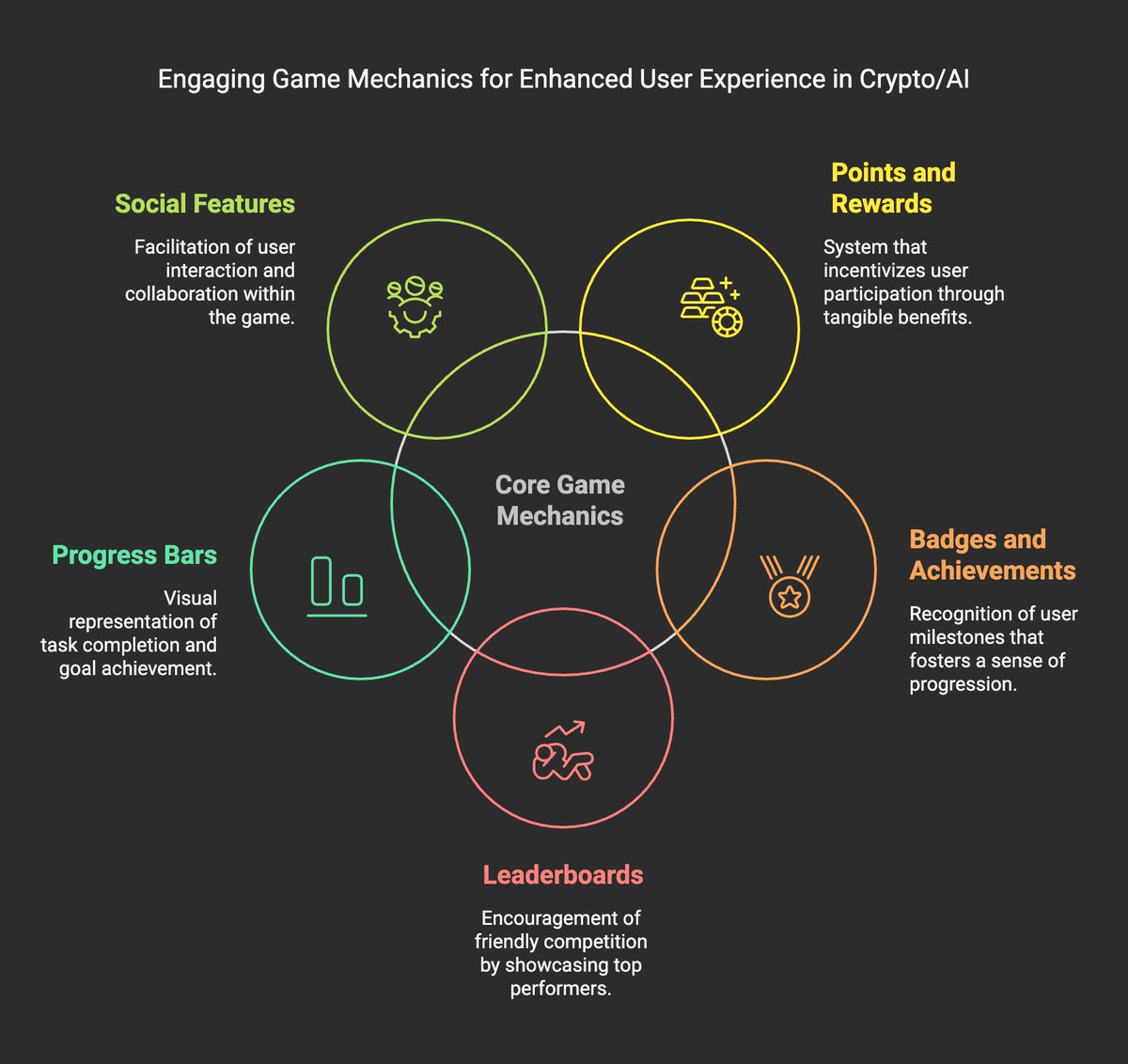
- Points and Rewards: Award points for completing tasks like staking, training AI models, or participating in community events. These points can be exchanged for in-app benefits.
- Badges and Achievements: Recognize user milestones with badges that symbolize their accomplishments, fostering a sense of progression.
- Leaderboards: Introduce friendly competition by showcasing top users in various categories (e.g., most active stakers, most accurate AI trainers). Note that some research suggests a focus on competition may not work in all cultural contexts.
- Progress Bars: Visually represent the completion of tasks and the achievement of goals.
- Levels: Allow users to progress through different tiers as they gain experience and complete activities.
- Challenges and Quests: Engage users by providing specific objectives that unlock rewards.
- Customization: Let users personalize their experience through avatars or other in-app options.
- Social Features: Incorporate ways for users to interact, collaborate, and compete with each other, which may include in-app chat or shared goals.
- Virtual Items: Allow users to collect, trade, and use digital assets earned through gameplay.
Transforming Technical Actions:
- Staking: Instead of a simple deposit action, visualize staking as “planting seeds” that grow over time. Add progress indicators to show interest accumulation.
- AI Training: Make training AI models interactive through challenges and puzzles. Allow users to “level up” their AI model as they contribute to its training.
- Trading: Introduce trading challenges with increasing levels of complexity. Gamify trading data using leaderboards to encourage better performance.
- Onboarding: Turn the often-tedious onboarding process into a quest, guiding new users through the platform with rewards for each step.
Successful vs. Failed Gamification:
- Successful: CryptoKitties successfully gamified blockchain by allowing users to collect and breed virtual cats, which were represented as NFTs. This increased awareness of cryptocurrencies and the concept of digital assets. A language-learning app that used gamification to encourage user engagement also saw a significant impact. These examples show how clear goals and satisfying gameplay encourage continued engagement.
- Failed: A health app that initially focused solely on data reporting did not engage users. However, when gamification was added by encouraging users to form teams and earn points, engagement improved. This failure shows that data alone is not enough for engagement; you have to make the experience fun and rewarding.
- Some companies make the mistake of simply adding game elements, like points or badges, without thinking about user psychology. These mechanics should be connected to the underlying core drives to be effective. Without a connection to a core human motivation, gamification may not work.
- Key lessons: Successful gamification is not just about adding points or badges; it’s about creating an engaging experience that taps into user motivation and makes technical concepts more approachable. The key is to design with a “human-focused” mindset, rather than a “function-focused” one. The goal is to create an experience that is its own reward.
Key Metrics:
- Daily/Monthly Active Users (DAU/MAU): Track how many users are engaging with the gamified features regularly.
- Time Spent in App: Measure how long users spend interacting with the gamified parts of the app.
- Task Completion Rates: Determine how often users are completing the gamified activities.
- Retention Rates: Track how many users are coming back to the app over time.
- Conversion Rates: See how many users are completing key actions like staking or training an AI.
- User Feedback: Collect both quantitative and qualitative feedback to gauge the effectiveness of the gamification.
Knowledge Drop: Octalysis Framework
Octalysis Framework: This framework, developed by Yu-kai Chou, identifies eight core drives that motivate human behavior. Applying these drives to crypto/AI features can significantly boost engagement:
- Epic Meaning & Calling: Make users feel like they are part of something bigger, a movement or a cause. For example, frame AI training as contributing to an important research goal.
- Development & Accomplishment: Allow users to see their progress, earn rewards, and gain a sense of mastery.
- Empowerment of Creativity & Feedback: Offer users choices and allow them to express themselves through their in-app actions. Allow users to customize their experience.
- Ownership & Possession: Give users a sense of ownership over their assets and in-app achievements. This could mean virtual items or other forms of digital property.
- Social Influence & Relatedness: Connect users to a community where they can collaborate and compete.
- Scarcity & Impatience: Make in-game assets and opportunities limited to encourage immediate engagement.
- Unpredictability & Curiosity: Introduce surprises and unexpected rewards to keep users interested.
- Loss & Avoidance: Create a sense of loss aversion by highlighting what users might miss out on if they don’t engage.

Balancing Engagement vs. Manipulation:
- Transparency: Be clear with users about how the gamified system works and what data it collects.
- Choice: Give users the freedom to choose how they engage with the gamified elements. Don’t force them into a specific behavior loop.
- Meaningful Goals: Focus on creating gamified experiences that align with user interests and values. Don’t just reward meaningless behavior.
- Avoid Artificial Limitations: Do not create “demand through inconvenience” by making the free version of the app too frustrating. Instead, focus on making the premium version engaging.
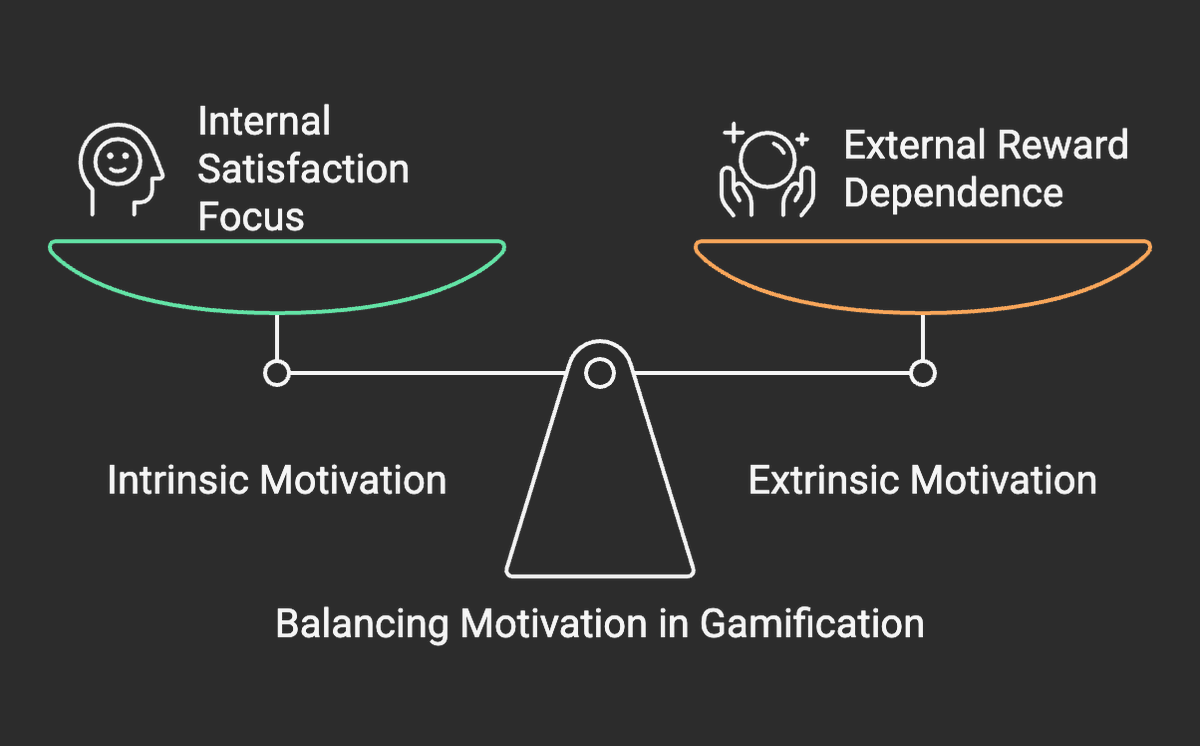
- Intrinsic Motivation: Aim for gamification that encourages intrinsic motivation (desire to perform an action for its own sake) over extrinsic motivation (desire to perform an action for external reward). Note, however, that studies show that extrinsic rewards don’t reduce intrinsic motivation when the task was already uninteresting. However, once you give someone a reward, you must continue the reward loop.
Founder Exercise
Worksheet for Gamifying a Core Product Feature (Example: Staking):
Identify the Core Action: Staking cryptocurrency.
- User Goal: To earn rewards, or perhaps to secure the network.
- Current Pain Points: Complex process, lack of visual feedback, feeling of tediousness.
Gamification Opportunities:
- Progress Bar: Visually show how close the user is to earning rewards.
- Virtual Seed: Start the staking process with a virtual “seed” that grows into a “tree” as staking rewards accumulate.
- Badges: Award badges for different staking achievements (e.g., first stake, large stake, staking for a specific duration).
- Community Challenges: Create staking challenges where users can collaborate to reach a common goal.
Octalysis Drives:
- Development and Accomplishment: Users see their stake grow.
- Ownership and Possession: Users feel they are growing their stake.
- Social Influence and Relatedness: Users can share their staking success.
- Scarcity and Impatience: Limited-time bonus rewards encourage immediate staking.
- Metrics: Track the number of new users staking, the average amount staked, time spent staking and the number of users who come back to stake again.
Checklist for Implementation:
- User Research: Understand your users and what motivates them.
- Core Drives: Determine which core drives of the Octalysis Framework to engage.
- Game Elements: Select game elements that align with the core drives and the context.
- Iteration: Continuously test and refine your gamified system based on user behavior and feedback.
- Ethical Considerations: Always ensure your gamification practices are transparent and not manipulative.
tl;dr: Gamification isn’t just about points and badges. It’s about making your crypto app so addictive that users can’t imagine their lives without it.
But here’s the real kicker …get gamification right, and something magical happens: your users become evangelists.
More on that tomorrow when we dive into why the most successful crypto products don’t just have users …. they have cults.
booyaka booyaka
 virality engineering hub
Leave a comment