The key driver of crypto/AI app adoption isn’t just the tech itself, but the community it builds. Many people believe that the value of crypto or AI applications is purely based on their tech, but in fact, a large part of their success is based on the community, narratives, and the users’ desire to be part of a larger movement. This is especially true for memecoins, which are not about memes, but rather “tokenized communities” that use narratives and techniques to get the price to go up. It’s about the human condition, retail motivation, and asset distribution, not just software and revenue.
Main points
Creating Demand vs. Closing Users
- Creating demand is about building a community around a shared narrative, while closing users is about getting them to adopt your product and start using it. In the context of crypto/AI apps, traditional “pushy” sales tactics are not as effective as creating a movement and inspiring people to join. Instead of focusing on features and technology, focus on the human condition, retail motivation, and asset distribution.
- It’s vital to differentiate between marketing, which aims to create a desire for the product, and sales, which is the act of turning that desire into a transaction.
- Effective marketing brings people in, grows the community, and educates potential users, while sales gently guides them towards conversion. Social media users do not want to be sold to directly.
Why Traditional Crypto Marketing Fails with Mainstream Users
- Traditional crypto marketing often focuses on technology, but the crypto industry is not a technology-first industry, but rather an “asset-first” one. Traditional marketing can feel inauthentic and pushy.
- Most people do not want to gamble on constantly rotating assets. Instead, they want to buy and hold something that they resonate with. Many people are not motivated by the technology or financial details of a project, but by the idea of being part of a like-minded community.
- Mainstream users often find crypto to be complex and inaccessible. This is because conducting transactions on the blockchain requires overcoming technological obstacles and a high degree of financial expertise.
Examples of Effective, Non-Pushy Crypto/AI Marketing
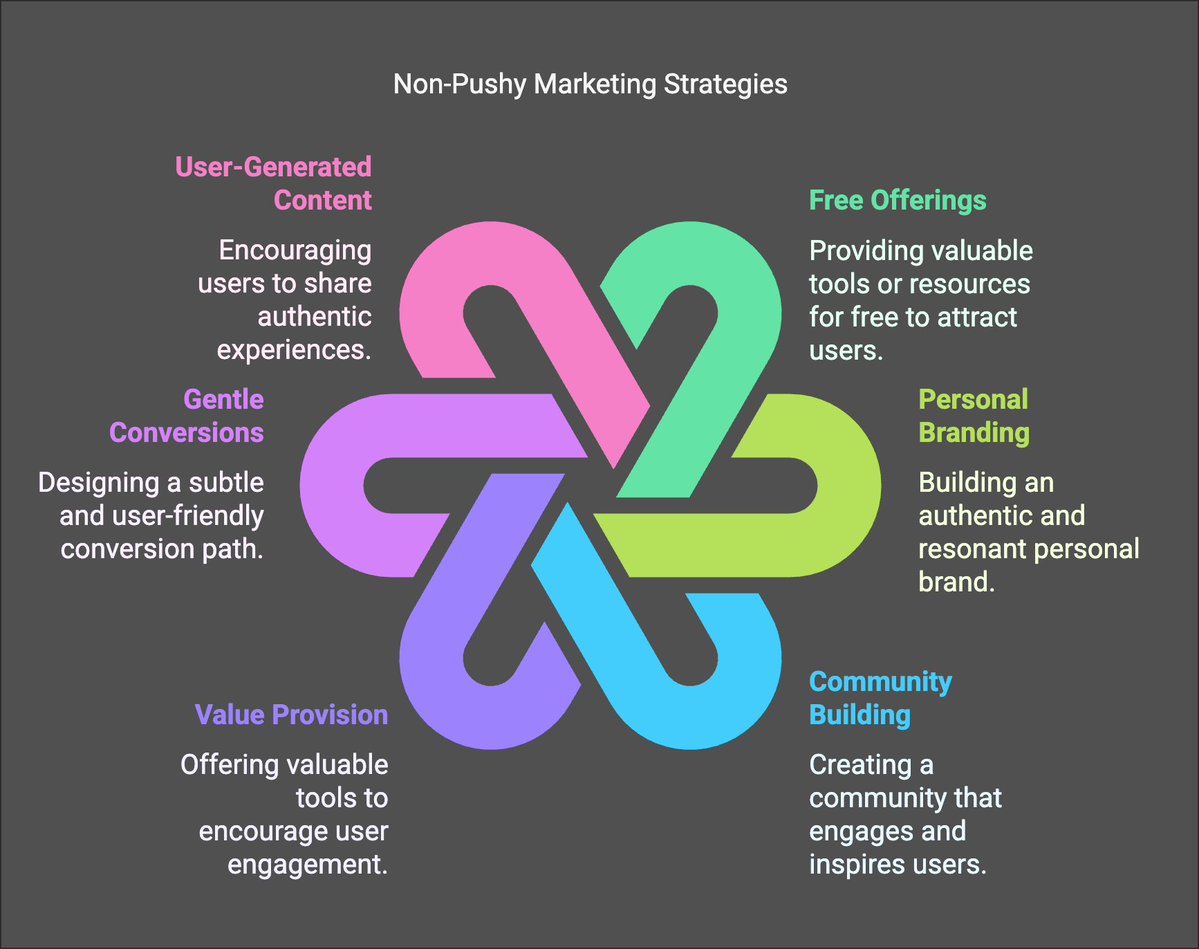
- Give away something valuable for free: This could be a free tool or resource that people are used to paying for. This strategy generates organic word-of-mouth and virality. For example, instead of focusing on selling AI marketing software, give away a free tool that analyzes websites and makes suggestions. The goal is to get people into your ecosystem so you can sell them on a bigger, more valuable service.
- Build a personal brand: A personal brand is important, but it should be authentic. It’s not just about timing, but about whether people resonate with you. Your authenticity and unique qualities can be your “X-factor”.
- Focus on community building: Create a community around your app that inspires people to be a part of a movement, not just a product. A strong brand social media account captures attention, grows the community, educates potential users, and presents a clear path to conversion.
- Provide value and utility: Give away valuable tools for free to get users into your ecosystem. For example, offer free access to AI tools or resources that help with research. The more valuable the free tool is, the more organic growth you are going to get.
- Create a gentle path to conversion: Social media users do not want to be sold to, but there needs to be a clear path to conversion for people that do want it.
- Leverage user-generated content: Encourage users to share their own stories of how the app has made their lives easier. Focus on marketing that feels organic and authentic, like a hidden gem discovered through a friend.
Knowledge Drop
Connect Viral Marketing Principles with Token Economics
- Viral marketing relies on consumers transmitting commercial messages to others in their social networks. The most well-known and used form is viral advertising.
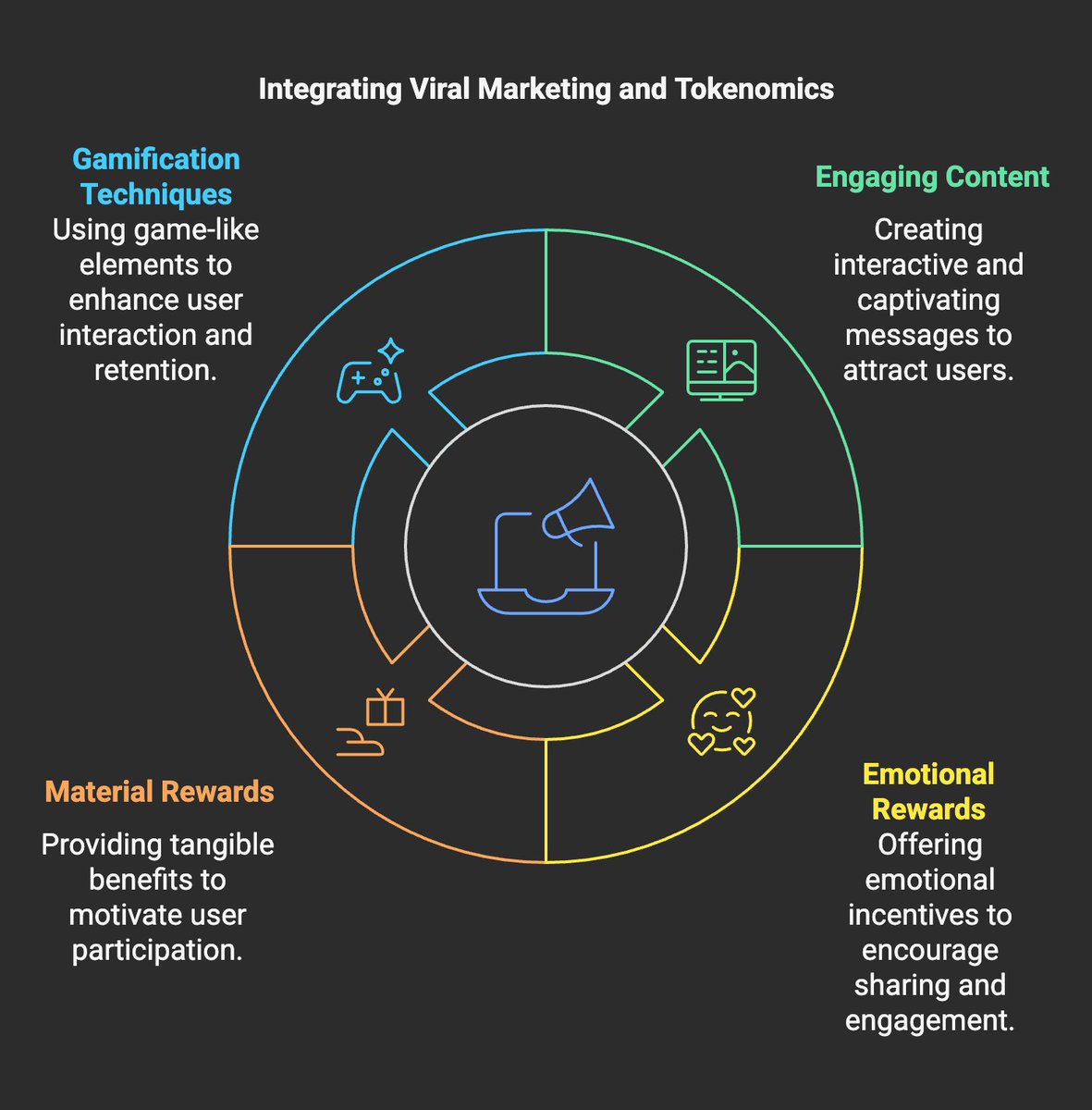
- To make a message “viral,” make sure it is engaging and interactive. The message should connect with consumers, persuading them to interact with the brand, and ultimately the product. Emotional and material rewards can encourage consumers to share messages.
- Viral marketing is related to word-of-mouth communication, and thus should tap into the same principles: The message has to be relevant and appropriate to the brand.
- Tokenomics can be tied to viral loops by rewarding sharing and engagement within the app with tokens. This creates a direct incentive for users to participate and spread the word. Gamification can also be leveraged to further engage users. Gamification techniques aim to attract and then retain users through the use of tasks, points, and rewards.
Creating Organic Growth Loops
- Give away something that people are used to paying for for free. The more expensive the item that you are giving away for free, the more organic and word-of-mouth you’ll create.
- Integrate a simple sharing function into the app’s authentication system.
- Optimize your product for sharing: include likes, comments, and views, to tap into the human need for social validation. These features create a feedback loop that keep users coming back for more. Use watermarks to help promote your app organically when users share content.
- After being onboarded, remind people that your app exists on other platforms.
- Focus on strong retention metrics, personalization, and habit formation. Design your onboarding to encourage users to actively use the app.

Builder Exercise
Marketing Strategy Template
- Define Your Target Audience: Instead of focusing on “interests,” consider how users will express themselves through the app.
- Identify Your “X Factor”: What makes your brand unique? What can’t other companies replicate?
- Develop a Compelling Narrative: Create a story that inspires people to join a movement. What is the core value proposition of your project?
- Focus on Community: Use social media to engage with potential users. Have clear calls to action, but provide a gentle path to conversion.
- Offer Value for Free: Give away something that people are used to paying for. For example, provide free access to your platform for a limited time or offer a free tool.
- Incentivize Sharing and Engagement: Use tokenomics to reward users for sharing and participating.
- Optimize for User Experience: Prioritize user-friendly design. Pay attention to the details: Mobile users spend over 4.5 hours on well designed apps, and 85% expect mobile experiences to exceed desktop.
- Build a Strong Brand: Focus on the “human condition” and “retail motivation,” and use that to create a brand that people can resonate with.
- Seek Feedback: Ask for user feedback throughout the process.
- Focus on Long-Term Value: Prioritize strong retention metrics. Instead of looking for a quick fix, focus on long-term growth.
Framework for Identifying Authentic Growth Channels:
- Don’t rely solely on AI: Don’t assume that AI tools can do all the marketing work for you. Instead, use AI for assistance with research, analysis, and efficiency. AI-generated content is not as good as manually created content.
- Focus on Platforms Where Your Target Users Spend Their Time: Identify the platforms where your target audience is most active.
- Consider “Search Everywhere Optimization”: Think beyond just Google and optimize for social media, AI tools, and other platforms.
- Don’t Overlook the Older Internet: Look to forums, Reddit, and news to find growth hacks.
- Realize that Conditions Matter: The most important thing is if the conditions to derive value are possible to orchestrate. Getting a few friends to install an app on a reproducible basis is non-trivial. A reproducible testing process is more valuable than a single idea.
- Be Authentic: Focus on a “human” approach, and build an authentic community around your product.
- Be Patient: Don’t expect overnight success. Building a sustainable business takes time and effort.
The truth is, all this marketing stuff is just your opening move. Like teaching someone to use chopsticks before hitting them with the ghost pepper sushi.
Next up: “Gamification: How to make complex actions feel natural” … or as I like to call it, “How to make your users addicted without getting arrested.”
Watch your back. And maybe start designing those achievement badges.
Peace out.
 virality engineering hub
Leave a comment