You’re scrolling through your phone. You open Twitter not because you need to post a banger but because you’re a little bit curious about what your frens are doing. Or maybe you launch a language learning app, not because you’re suddenly passionate about linguistics, but because you want to feel a sense of accomplishment and progress. The reality is, we don’t always use apps for the reasons founders think we do. We’re often driven by deeper, more subtle motivations. People download apps to make or save money, find a mate, or unplug from reality (you heard this before, you will hear it again).
Main Points:
Core Human Motivations:
- Social Proof: Humans are social creatures who look to others to validate their choices. In apps, this manifests as features like likes, comments, and follower counts. We are driven by the desire to be socially accepted and to connect with others. Seeing that others are using and enjoying a product can encourage adoption.
- Status: We are hardwired to chase status, seeking wealth, social recognition, attractiveness, and intelligence. Apps tap into this by offering badges, leaderboards, and opportunities to showcase accomplishments.
- FOMO (Fear of Missing Out): This is a powerful motivator. People want to stay connected and not miss out on what others are doing. Apps create urgency with time-sensitive content and limited-time offers. The fear of missing out can be a major driver of engagement.
- Autonomy, Relatedness, and Competence: These core needs from the Self-Determination Theory (SDT) can influence motivation. Autonomy refers to feeling in control of one’s life, relatedness refers to forming strong social bonds, and competence refers to feeling effective in dealing with challenges.
- Core Desires: People have core desires that can be grouped into categories such as a spiritual journey, leaving a mark, providing structure, or connecting with others. These categories can be further broken down into desires for happiness, security, belonging, status, legacy, recognition, service, freedom, revenge, meaningful relationships, innovation, living in the present, finding truth, making dreams come true, power, and wealth.
How these motivations manifest in Web3/AI:
- Social Proof: In Web3, social proof can involve the number of token holders, community engagement in DAOs, or endorsements from respected figures. In AI, social proof might be tied to testimonials, the number of users, or industry recognition.
- Status: Web3 projects can offer status through NFT ownership or governance rights within a decentralized organization. AI apps can offer status by showcasing personalized results or early access to new features.
- FOMO: Web3 is particularly susceptible to FOMO due to the volatile nature of token prices and the promise of “getting in early” on the next big thing. AI apps can leverage FOMO by offering limited-time access to exclusive features or early adoption bonuses.
- Autonomy, Relatedness, and Competence: Web3 and AI apps should focus on user empowerment. They should allow users to feel in control of their data and digital assets, build strong communities, and master new technologies.
- Core Desires: Web3 and AI apps should tie into the users core desires. For example, a Web3 app that provides financial freedom could be aligned with the ‘freedom’ archetype. An AI app focused on personal growth can tap into the “innovation” and “meaningful relationships” desires.
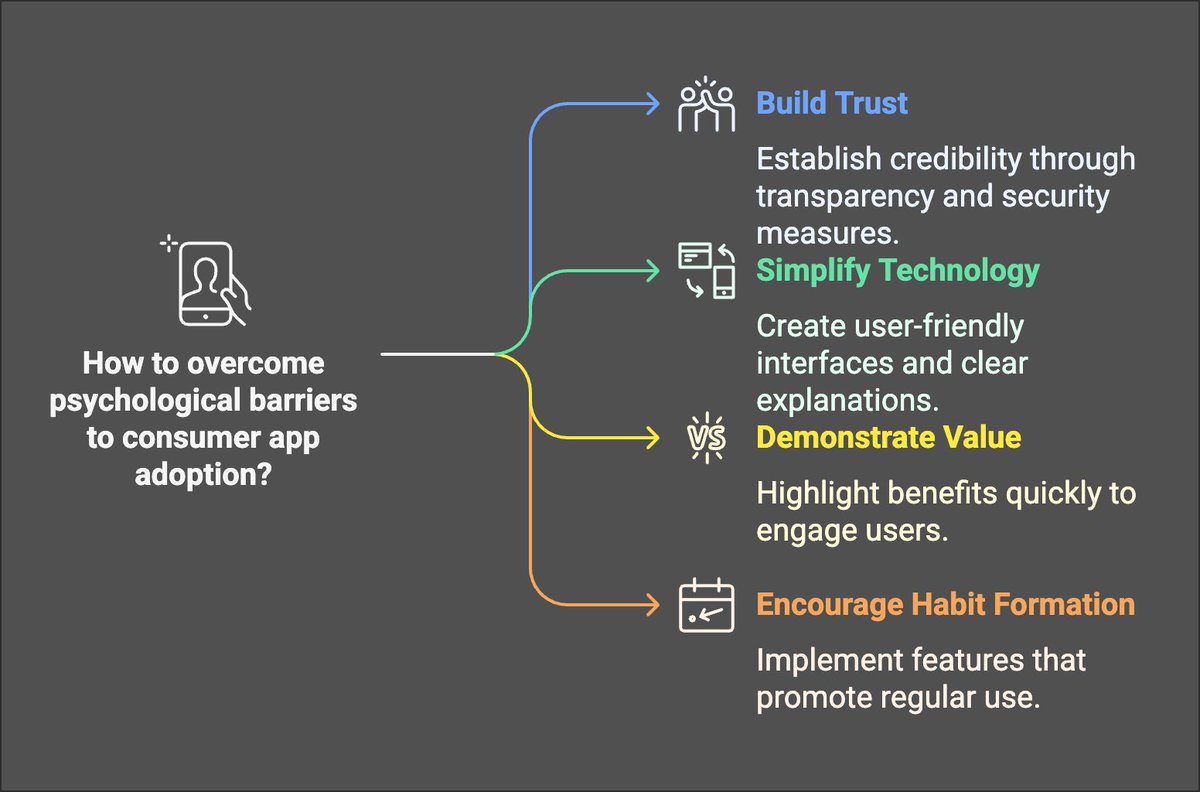
Common Psychological Barriers to Consumer App Adoption:
- Lack of Trust: People are hesitant to trust new technologies, especially those related to finances or personal data. Web3 projects, which are often decentralized and anonymous, face particular challenges in building user trust. Similarly, users may be wary of AI apps that handle sensitive data.
- Complexity: Many Web3 and AI technologies are complex, creating a barrier to adoption. If users don’t understand how something works, they are less likely to use it.
- Lack of Perceived Value: If users don’t see how an app will benefit them, they won’t adopt it. Apps must demonstrate value within the first three seconds of use.
- Habit Disruption: If the behavior your app is trying to create doesn’t occur within a week, it may be difficult for it to become a habit.
Knowledge Drop:
Connecting Theory to User Perception:
- The Fogg Behavior Model: This model states that for a behavior to occur, a person must have sufficient motivation, ability, and a trigger. Successful apps make it easy for people to take action while providing strong motivation and triggers.
- Self-Determination Theory: This theory suggests that people are naturally proactive when a behavior satisfies the need for autonomy, relatedness, and competence.
- Meaningful Gamification: Users are more motivated by game elements that are relevant to their interests and goals. Gamification should focus on providing information and user-centered design rather than just providing scores.
- Core Value Proposition: Users must quickly understand the value that an app offers. Apps must create a core, gratifying experience that makes them indispensable.
Bridging the Psychological Gap:
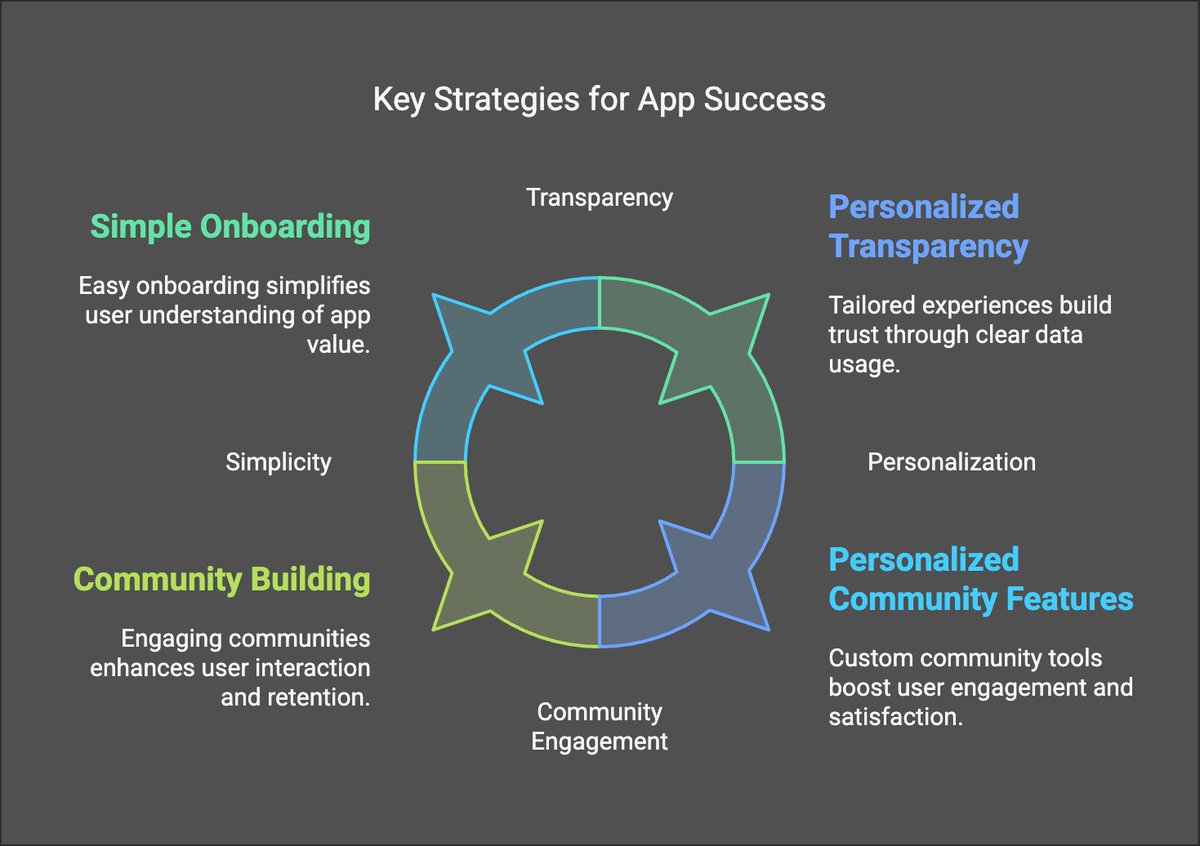
- Simplicity: Successful apps like Apple’s AirPods prioritize simplicity and ease of use. Complex technology must be hidden behind a user-friendly interface.
- User-Centered Design: Prioritize user needs at every step of the design process. Use techniques like empathy and design thinking to better understand the user experience.
- Strong Onboarding: A well-designed onboarding process can help users understand the app’s value quickly and easily. It can be helpful to use personalization in the onboarding process to make users feel like the app is tailored to their needs.
- Community Building: Fostering a strong sense of community can encourage users to engage more.
- Transparency: Being open and transparent about how a technology works, especially when it comes to data usage, is essential for building trust.
- Personalization: Users must feel that an app is created just for them, which can be achieved with personalized content feeds, onboarding questions, and features.
- Focus on the “Aha Moment”: Ensure users quickly experience the core value of the app. Attention spans are short, so it’s important to show value in the first three seconds.
Builder Exercise:
Template for Mapping User Motivations:
- Identify the Target Audience: Who are you building this app for?. Consider demographics, psychographics, and existing behaviors.
- Determine Core Desires: Which core desires does your app address? (e.g., freedom, connection, status).
- Map Features to Motivations: How does each feature of your app connect to these core desires and motivations?
- Identify Potential Barriers: What psychological barriers might prevent your target audience from adopting the app? (e.g., lack of trust, complexity).
- Design Strategies to Overcome Barriers: What design and messaging strategies will you use to overcome these barriers?
- Test Your Assumptions: Collect user feedback and iterate on your understanding of user motivations.
Framework for Identifying Emotional Triggers:
- Understand the User Journey: What are the different phases of a user’s experience with your product (discovery, onboarding, scaffolding, end game)?
- Identify Pain Points: What are the pain points or frustrations that users experience during the journey?
- Determine Emotional States: Which negative emotional states prompt users to seek a solution (e.g. boredom, anxiety, loneliness)?
- Craft Triggering Messages: How can you create messaging and notifications that acknowledge these pain points and offer relief?
- Test Different Triggers: Use A/B testing to determine which triggers are most effective for your target audience.
Remember, the key to success is to understand the underlying psychology that drives user behavior and to create products that are not only useful but also emotionally engaging. In the end, the most successful apps are those that feel like they are built for each individual user.
Look, we’re all just monkeys with smartphones, chasing status and dopamine hits. Understanding these psychological triggers isn’t just neat trivia – it’s your roadmap to building something people actually want to use.
But here’s the real question: How do you get those first users to show up to your empty party?
Tomorrow, we’re tackling the Cold Start Problem. You know, that awkward moment when your social app is about as lively as a ghost town.
See you then. Try not to psychologically manipulate anyone until then. 😉

 virality engineering hub
Leave a comment