The Power of Community-Driven Growth
Data consistently demonstrates a significant difference in retention between community-driven and marketing-driven apps, particularly in the crypto/AI space. While specific numbers vary, studies show that apps fostering strong communities experience substantially higher user retention rates and long-term engagement compared to those relying solely on traditional marketing. This underscores the importance of building a community, which provides sustained attention from a group of people over a long period of time. This sustained attention is the internal value of a community. The external value comes from the signals sent to the outside world. A larger community sends signals that a project is worth paying attention to. The ability to build a community is key to long-term success and should be prioritized over short term tactics like hype.
Main Points:
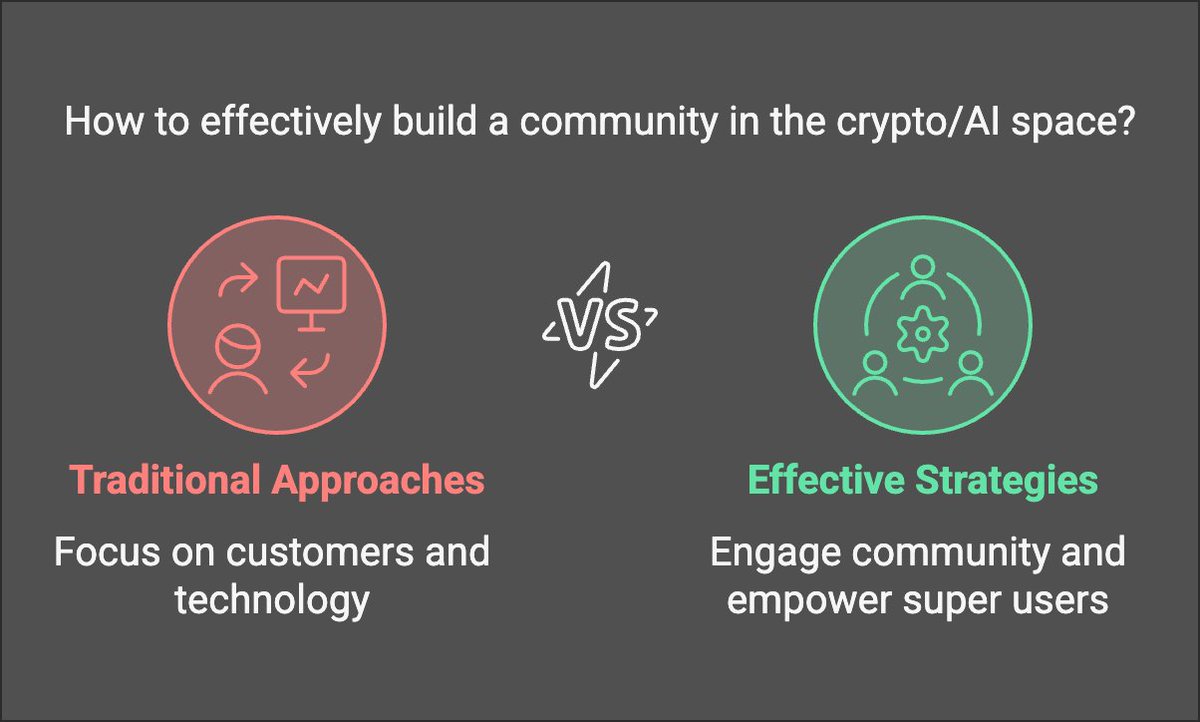
- Why Traditional Community Building Fails in Crypto/AI: Traditional marketing and community-building tactics often fail in the crypto/AI space because they treat users as customers, rather than as a community with a shared desire. Additionally, many projects confuse followers on social media with genuine community. Furthermore, focusing solely on the technology or product features often neglects the emotional and aspirational needs of users. Many projects are focused on the “thing” they are building instead of the “hope” they are selling, which is a key component of building a strong community. Also, the crypto space has unique challenges. Many people in the crypto space, including developers, are overly focused on the technology, and neglect marketing and opportunity creation. This means that many great crypto projects struggle to get off the ground. Also, the lack of open source in some DApps can also impact their popularity. Specifically, DApps with open-source smart contracts tend to have higher transaction volumes, indicating that transparency can be a significant factor in attracting users. Finally, traditional methods may not be effective due to the fast-paced and ever-evolving nature of this space.
- How to Identify and Empower Early Super Users: Identify early super users by looking for those who are actively engaged and passionate about your project. These users often share a core desire or vision for the project. Empower them by giving them a voice in decision-making, providing early access to features, and recognizing their contributions. These individuals may become community leaders. This can be done by building a community before releasing an app. This can give you an immediate userbase and lots of feedback.
Specific Tactics for Discord/Telegram Management That Scale:
- Establish clear community guidelines and enforce them consistently to foster a positive and inclusive environment.
- Create designated channels on Discord for different topics and interests to keep the community organized and encourage focused discussions. Don´t do that on TG, it kills the vibes.
- Use bots and automation tools to manage repetitive tasks, moderate discussions, and provide quick responses to common questions.
- Actively engage in discussions, ask for feedback, and encourage interaction among community members to ensure everyone feels heard.
- Recognize and reward active members through special roles, exclusive content, or other incentives to show appreciation for their contributions.
- Converting Passive Users into Active Community Members:
- Create opportunities for participation: Design features that encourage users to engage with each other and the project.
- Gamify the experience: Use points, badges, and challenges to incentivize activity and reward contributions.
- Host regular events and AMAs to build connections with the community and provide valuable insights.
- Highlight user-generated content: Share and celebrate content created by the community to foster a sense of belonging.
- Make the vision clear: Ensure your project’s vision has a large impact on a wide range of people. Your vision should encourage the users’ dreams, justify their failures, lay their fears, confirm their suspicions, and help them throw rocks at their enemies.
Knowledge Drop:
- Connect Community Psychology to Token Incentives: Successful communities often align token incentives with core human desires for social connection, status, and a sense of purpose. Consider Carl Jung’s framework of desires that people typically want: a spiritual journey, a desire to leave a mark, to provide structure to the world, or connect with others. If token incentives can be tied to one or more of these, engagement should increase. Tokenized communities are more than just the technology or meme that they represent, they are about the people involved.
- Creating Self-Sustaining Community Loops: Focus on creating “flywheels” that encourage community growth and engagement. This can be done by building community through word of mouth and by aligning incentives within the community, where people want to work with you because they get something out of it. For example, reward users for inviting others to the platform, and for creating content that is valuable to the community. Encourage them to participate in governance and decision-making processes. When communities feel invested in the success of the project, they are more likely to contribute to its growth. By creating incentives, communities can reach critical mass. Remember that building a community for a product with network effects and a communication tool should be positioned on the upward curve of adding connections to your social graph because there is a higher urgency to connect.

Builder Exercise:
Community Activation Playbook Template:
- Define your target audience: Understand their motivations, needs, and aspirations.
- Develop a clear value proposition: Explain how your project will benefit them.
- Establish community guidelines: Set the rules for engagement and participation.
- Create a content calendar: Plan regular content and activities to keep users engaged.
- Identify community leaders: Recognize and empower active members to help grow the community.
- Implement a feedback loop: Continuously collect user feedback and use it to improve the community and the project.
- Incentivize activity: Use tokens, rewards, or recognition to encourage participation.
- Focus on the “hope” you are selling: Projects succeed when they sell “hope” in a way that aligns with people’s needs. Sell users what they want, and give them what they need.
Framework for Identifying Potential Community Leaders:
Look for users who are:
- Highly engaged: They actively participate in discussions, events, and activities.
- Passionate about the project: They believe in the vision and are motivated to contribute.
- Helpful and supportive: They are willing to help other members and create a welcoming environment.
- Good communicators: They can effectively articulate ideas and engage with others.
- Consistent and reliable: They are consistently contributing to the community over time.
- Provide opportunities for them to take on leadership roles: Assign special roles, give them moderation responsibilities, and ask for their input on decisions.
Key Takeaways:
- Authentic community growth is essential for long-term success in the crypto/AI space.
- Focus on building genuine connections and empowering your community.
- Don’t rely on hype or artificial tactics. Instead, sell “hope” to your community.
- Align token incentives with core human desires.
- Always do right by users, because the internet will eventually seek revenge if you do wrong.
tl;dr – Community building is psychological warfare but with better vibes. Sell hope, not hype. And remember: the internet never forgets.
But here’s the real galaxy brain move: why build a community from scratch when you can… ahem… “borrow” one?
Tomorrow we’re diving into the dark arts of audience hijacking – how to tap into existing communities without looking like a total shill. Spoiler: it involves more psychology and less spam. Much more.
Don´t die. But first, go mobilize your army.
We’re just getting started with the psychological warfare.
 virality engineering hub
Leave a comment