The Power of Community
Think of a crypto-based application that, instead of pouring money into conventional marketing, partnered with an established online community centered around sustainable living. By offering exclusive tools within their app that helped this community track their carbon footprint and trade eco-friendly tokens, the app quickly gained traction. This demonstrates how adding value to an existing community can lead to surprising success.
Main Points..Identifying Relevant Communities Without Being Predatory
- Understand Community Values: Before approaching any community, deeply research their values, norms, and needs. A misaligned offering will be quickly rejected. Look for communities where your app can genuinely solve a problem or enhance their experience.
- Non-Fungible Locations: Consider how the locations can be non-fungible. An Uber driver 20 minutes away is very different from one five minutes away.
- Analyze Community Engagement: Look for communities with active participation and a clear sense of identity. High engagement indicates a receptive audience.
- Avoid Overt Self-Promotion: Don’t be the person who is just trying to fill their empty cup.
Tactics for Providing Genuine Value to Existing Groups
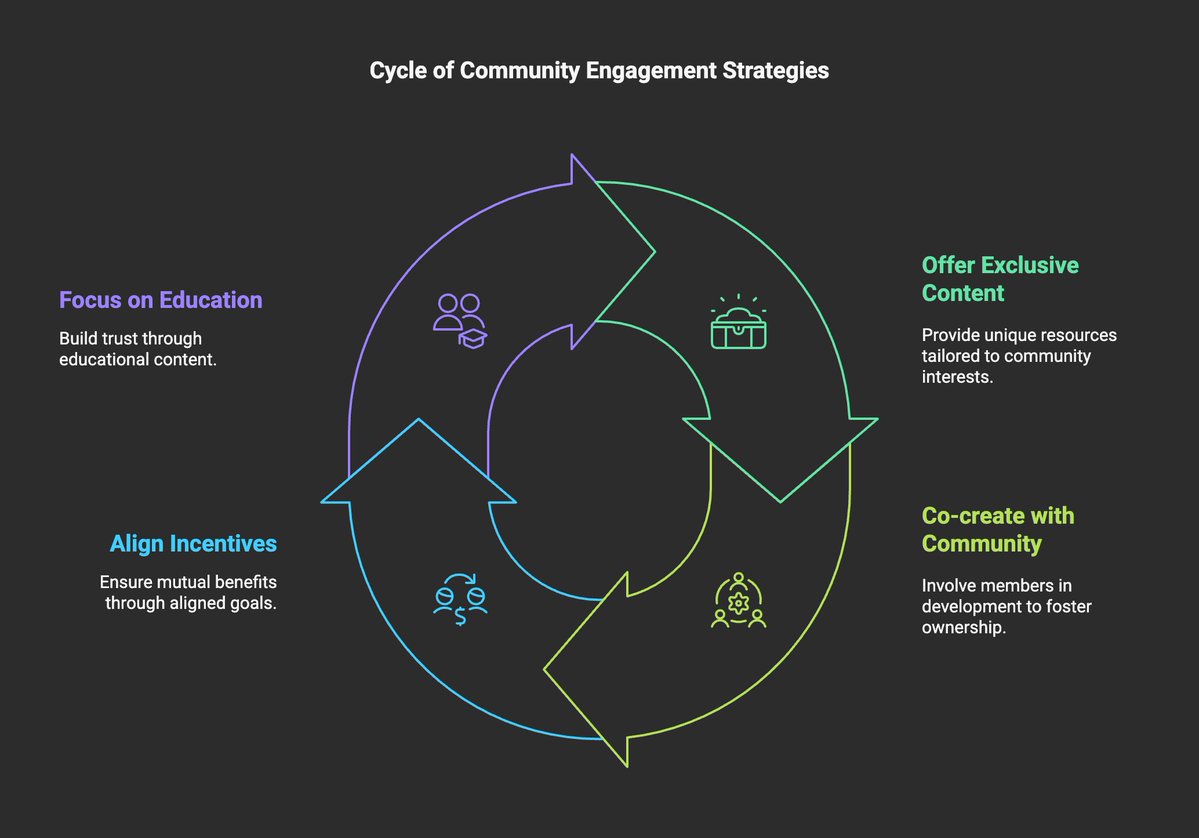
- Offer Exclusive Content or Tools: Provide unique resources or features tailored to the community’s interests. This could be specialized AI-driven analytics for a crypto trading group or early access to new AI art generation tools for a digital art community.
- Co-create with the Community: Involve community members in the development process. This fosters a sense of ownership and ensures the app meets their specific needs.
- Align Incentives: Ensure that both your app and the community benefit from the partnership. Offer revenue sharing, exclusive access, or other incentives that align with the community’s goals.
- Focus on Education: Provide educational content and thought leadership to establish credibility and build trust.
Examples of Successful Cross-Community Growth
- Launchpads: Crypto launchpads provide access to established communities in exchange for a cut of sales.
- Content Creation and Crypto: Using crypto to reward content creators within specific online communities, fostering a more equitable ecosystem.
- Fitness App: Imagine you’ve launched a fitness app that connects to the Apple Watch to help users plan their workouts. To market the app indirectly, you create a Discord community around fitness, inviting people to discuss workouts, share diet tips, and connect with others interested in health and wellness.
- Gaming and Crypto: Integrating NFTs into existing games to provide provable scarcity and ownership of in-game assets.
- AI and Education: Partnering with online learning platforms to offer AI-driven personalized learning experiences.
Common Mistakes That Lead to Community Rejection
- Lack of Authenticity: Communities can spot inauthentic attempts to capitalize on their existing structure.
- Ignoring Community Norms: Failing to understand and respect community guidelines can lead to immediate rejection.
- Overselling: A hard-sell approach is generally frowned upon in online communities. Focus on providing value first and subtly integrating your app.
- Neglecting the “Hard Side”: In any startup, there’s always a “hard side,” usually the supply side. Focus on solving the hard side problem.
Knowledge Drop:
Network Theory:
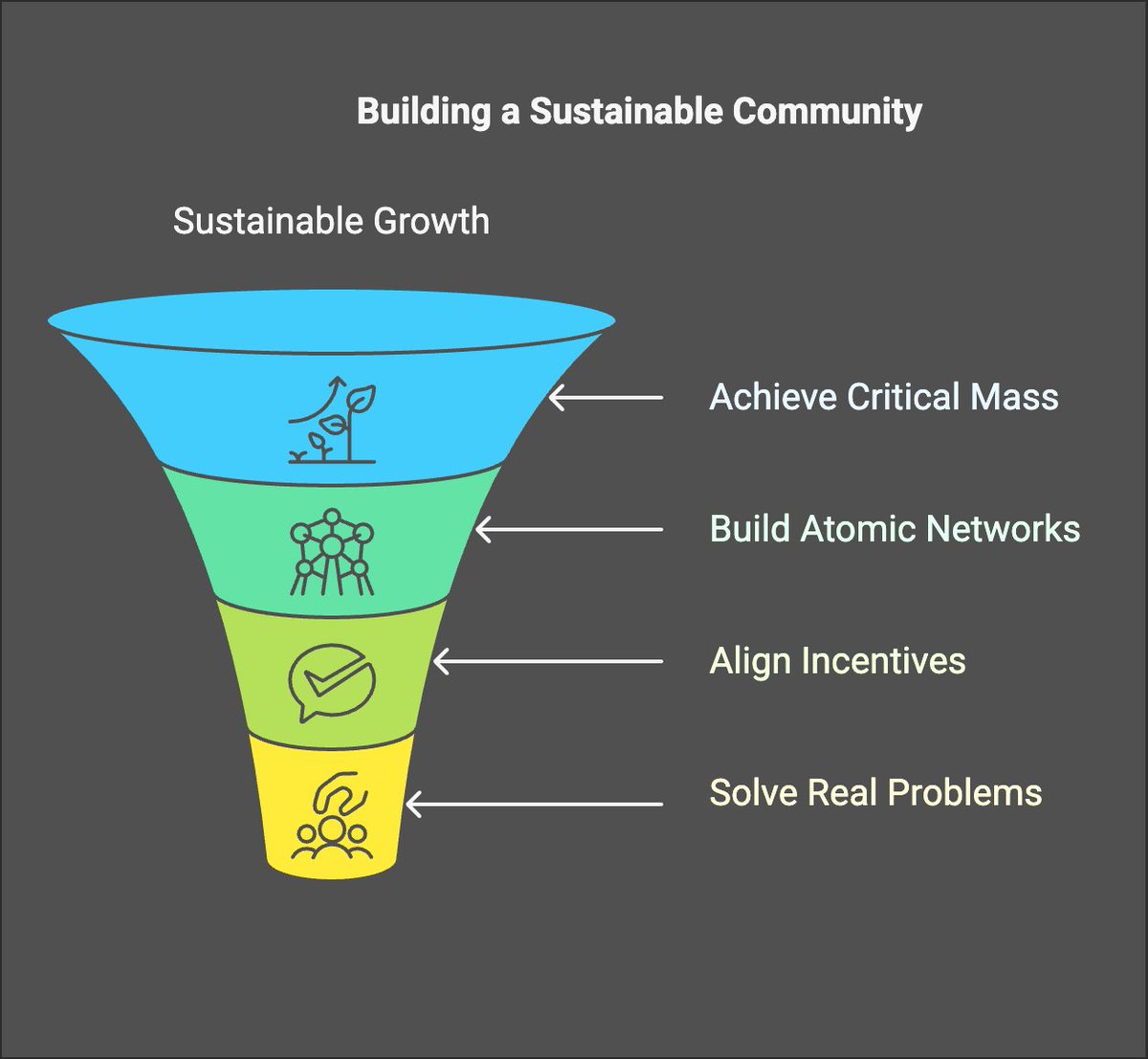
- Critical Mass: Aim to achieve critical mass within a community. This is the point where the platform’s growth becomes self-sustaining.
- Atomic Networks: Focus on building small, engaged networks first. These “atomic networks” can then be replicated and scaled.
Win-Win Growth Scenarios:
- Incentive Alignment: Create scenarios where the community and the app both benefit. This could involve revenue sharing, exclusive features, or increased exposure for community members.
- Solve a Real Problem: Ensure your app addresses a genuine need within the community. This creates inherent value and encourages adoption.
Builder Exercise:
Community Mapping Template:
- Identify Potential Communities: List 5-10 online communities that align with your app’s target audience.
- Analyze Community Demographics: Research the age, location, interests, and online behavior of community members.
- Assess Community Needs: Identify the unmet needs and pain points of community members.
- Evaluate Community Culture: Understand the community’s norms, values, and communication styles.
- Identify Key Influencers: Determine the most respected and influential members of the community.
Value Proposition Worksheet for Each Target Community:
- Community: (Name of the online community)
- Community Need: (Specific need or pain point)
- App Feature: (How your app addresses the need)
- Value Proposition: (Clear statement of the benefit to the community)
- Integration Tactic: (Specific actions to engage the community without being predatory)
- Call to Action: (Clear next steps for the community to engage)
- Create ton of content that help people solve the problem: Create tons of content that help people solve the problem for whatever solution you’re pitching.
By focusing on genuine value, understanding community dynamics, and aligning incentives, crypto/AI apps can effectively leverage existing audiences for sustainable growth.
Look, at the end of the day, all this community stuff boils down to one thing: you’re not just looking for users …. you’re looking for people who’ll have that “holy shit, this actually works” moment with your product.
Which, funny enough, is exactly what we need to talk about next. Because you can leverage the biggest community in the world, but if users don’t have that lightbulb moment in the first three seconds of using your app? Game over.
Tomorrow we’ll dive into why those “aha” moments are literally make-or-break for crypto and AI apps. You know, those moments when someone goes from “what the hell is this?” to “how did I live without this?” Trust me, if you thought community building was critical, wait until you see how these instant realizations can turn casual users into die-hard advocates.
See you tomorrow. And maybe start thinking about the last time an app made you go “aha.” Chances are, it happened faster than you think
 virality engineering hub
Leave a comment