The $585.72B Mobile App Market and the AI/Blockchain Opportunity
The mobile app market is projected to reach a staggering $585.72 billion in 2025. With an annual growth rate of approximately 7.84%, it’s expected to hit $781.70 billion by 2029. Within this booming market, AI and crypto technologies are emerging as key drivers of innovation and disruption, offering unprecedented opportunities for consumer app development.
Key Consumer Trends Driving App Growth
Several key consumer trends are fueling the growth of the mobile app market, particularly within the AI and blockchain sectors:
- AI Integration for Personalized Experiences: Consumers increasingly expect personalized and intuitive app experiences. AI is enabling hyper-personalization, revolutionizing ad targeting, and streamlining creative production, making apps smarter and more adaptive. By 2025, a significant portion of user-friendly apps will be powered by AI.
- Growing Demand for Privacy and Data Control: Users are becoming more conscious of their data privacy and are seeking apps that offer greater control over their personal information. This trend necessitates the adoption of privacy-conscious strategies and data handling methods in app development.
- Mobile Commerce Dominance: Mobile devices are increasingly used for e-commerce transactions. In 2021, over 72.9% of total e-commerce sales came from mobile devices. This trend indicates a significant opportunity for apps that facilitate seamless and secure mobile commerce experiences.
- The Rise of “On-Demand” Apps: On-demand mobile app development is trending upward, mirroring the success of apps like Airbnb and Uber.

AI-Powered Apps: The Future is User-Friendly
Gartner reports that approximately 70% of all user-friendly apps will be powered by artificial intelligence. This highlights the critical role of AI in creating engaging and personalized user experiences. AI can be used for predictive analytics, providing users with tailored product suggestions and preferences based on their behavior history. No two users will have the same experience with an AI-powered app, which will be a major component of the mass market appeal.
Major App Categories Primed for Disruption
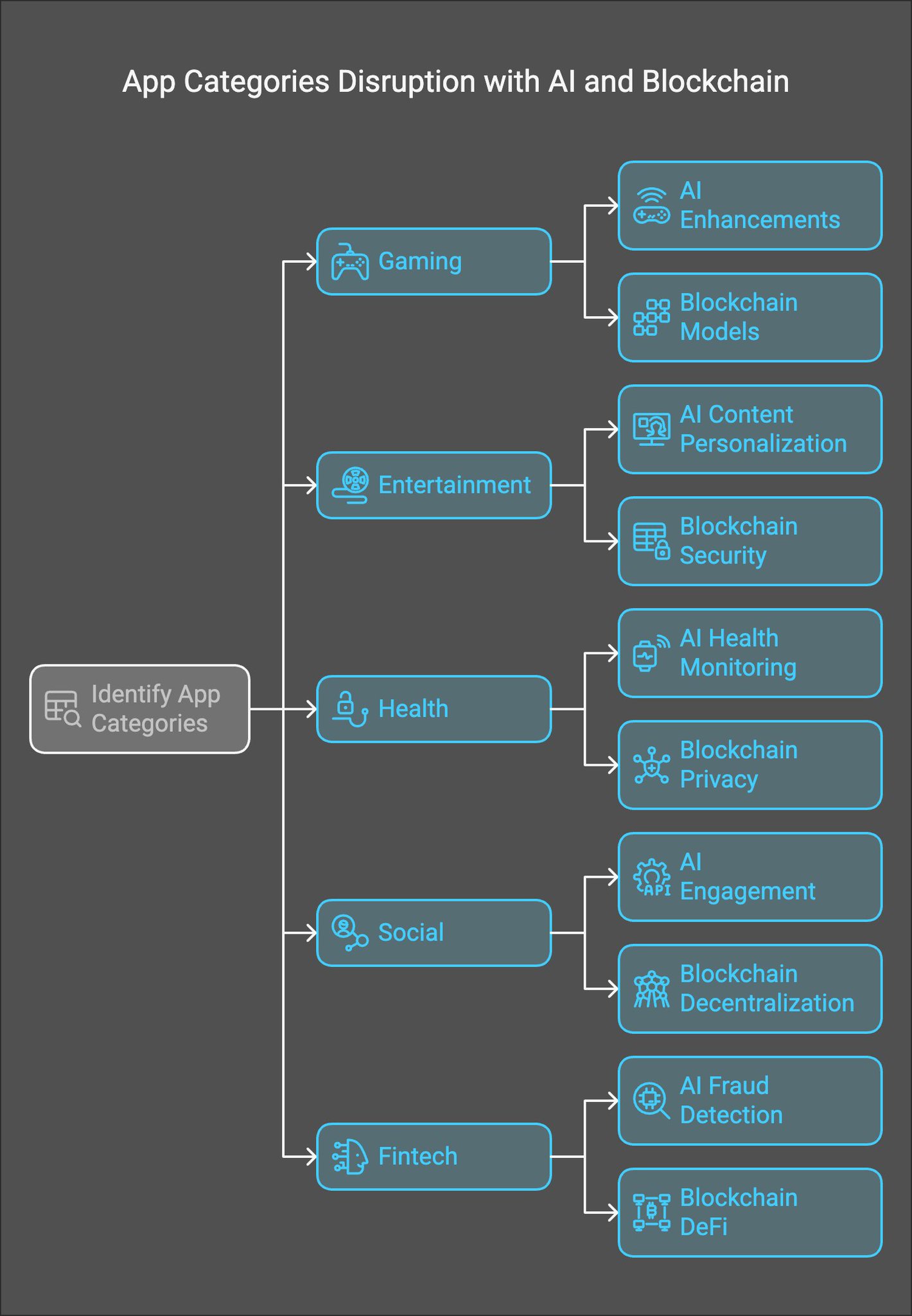
Several major app categories are particularly ripe for disruption through the integration of AI and blockchain technologies:
- Gaming: AI can enhance gaming experiences through personalized gameplay, intelligent non-player characters (NPCs), and improved game design. Blockchain can enable new gaming models, such as play-to-earn, where players can own and trade in-game assets using NFTs.
- Entertainment: The entertainment sector is seeing increased consumer spending on apps, particularly those related to OTT (Over-The-Top) and short video content. AI can enhance content recommendation, personalize viewing experiences, and streamline content creation.
- Health: Healthcare apps can leverage AI for personalized health monitoring, early disease detection, and improved patient outcomes. Blockchain can ensure data integrity and privacy in healthcare records, addressing critical security concerns.
- Social: Decentralized social media apps built on blockchain can provide users with greater control over their data and content, addressing privacy concerns and promoting freedom of expression. AI can enhance content moderation, personalize user feeds, and improve user engagement.
- Fintech: Digital wallets, powered by AI and secured by blockchain, are poised for continued growth in e-commerce. AI can enhance fraud detection, personalize financial advice, and automate trading strategies. Blockchain can enable decentralized finance (DeFi) applications, offering alternatives to traditional financial services.
Using Social Media to Validate Trend Alignment
Social media platforms can be valuable tools for validating trend alignment and gauging consumer interest in specific app concepts. By monitoring social media conversations, analyzing user-generated content, and engaging with online communities, developers can gain insights into consumer preferences and identify unmet needs. Influencer marketing can also be an effective strategy for reaching target markets and promoting app adoption.
Knowledge Drop: Connecting Mainstream App Trends to Crypto/AI Opportunities
Mainstream app trends, such as the projected $270 billion in consumer spending by 2025, present significant opportunities for crypto and AI integration. For example, AI-powered personalization can be applied to e-commerce apps to provide tailored product recommendations and enhance the shopping experience. Blockchain-based loyalty programs can reward users with cryptocurrency for their engagement and purchases.
Identifying Gaps in Current Consumer Apps
To identify gaps in current consumer apps, consider the following:
- User Pain Points: What are the common complaints and frustrations expressed by users of existing apps?
- Unmet Needs: What needs are not being adequately addressed by current app offerings?
- Emerging Technologies: How can AI and blockchain be used to create new and innovative app features that are not currently available?
- Community Feedback: What are the people saying online, and how can I implement a new feature to fulfill their demand?

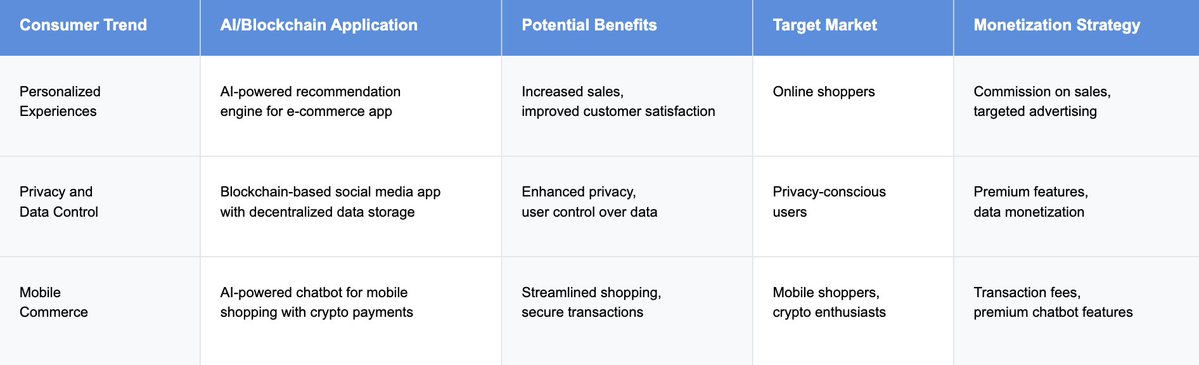
Builder Exercise: Consumer Trend Opportunity Mapping Template
To systematically identify consumer app opportunities, use the following template:
Market Gap Analysis Framework
Use the following framework to analyze market gaps and identify potential app opportunities:
- Identify Target Market: Define the specific consumer group you are targeting (e.g., gamers, healthcare patients, social media users).
- Analyze Existing Apps: Research existing apps in the target market, identifying their strengths and weaknesses.
- Identify Unmet Needs: Determine what needs are not being adequately addressed by existing apps.
- Brainstorm AI/Blockchain Solutions: Explore how AI and blockchain technologies can be used to address the identified unmet needs.
- Evaluate Feasibility: Assess the technical and economic feasibility of developing the proposed app solution.
- Validate Market Demand: Gauge consumer interest in the proposed app solution through surveys, focus groups, and social media analysis.
Watch Your Stack
Look, building consumer apps in 2025 is like trying to catch lightning in a bottle while everyone’s screaming “AI” and “blockchain” into the void. But here’s the thing – users don’t care about your fancy tech stack. They care if your app makes their life better or their wallet fatter.
tl;dr:
- Mobile app market’s going to $585B
- AI and blockchain are your secret weapons
- Users want apps that don’t suck
- Build for humans, not VCs
Watch your back.
Remember: I’m not your product manager, just a guy who’s seen too many apps die.
 virality engineering hub
Leave a comment