Politics in crypto startups is like watching a promising football club self-destruct from the inside. The Boss’s playing armchair Guardiola while never having kicked a ball, the tech lead is collecting technical debt like Barcelona collecting financial debt, and middle managers are doing more diving than Neymar on a windy day. Meanwhile, the actual talent…the Mbappés and Haalands of your dev team….are checking transfer options while the board fights over who gets the corner office. When your governance structure has more red flags than a Manchester United match under the Glazers, you don’t need a VAR review to know you’re in trouble. <facepalm.gif>
In the fast-paced world of crypto startups, your internal culture can make or break your success. While you’re focused on building the next revolutionary app, silent workplace politics might be sabotaging your progress from within.
The Hidden Cost of Politics in Crypto Startups
Cut the bullshit for a second – crypto startups are already playing on hard mode:
- Regulatory uncertainty creates enough external pressure
- Market volatility demands quick adaptability
- Investor expectations are sky-high
- Technical complexity requires focused teamwork
The last thing you need is energy-draining internal politics.
Understanding Power vs. Force
Here’s a simple framework that has helped many founders identify and eliminate destructive politics:
Force is pushing your agenda through manipulation and control. Power comes from alignment with meaningful principles that naturally attract others.
Force (The Destroyer)
- Hoards information as leverage
- Creates division through favoritism
- Demands loyalty without earning it
- Operates through fear and intimidation
- Leads to resentment, mistrust, and high turnover
Power (The Builder)
- Shares knowledge openly
- Creates unity through fair treatment
- Earns respect through consistent actions
- Operates through inspiration and vision
- Results in trust, innovation, and team stability
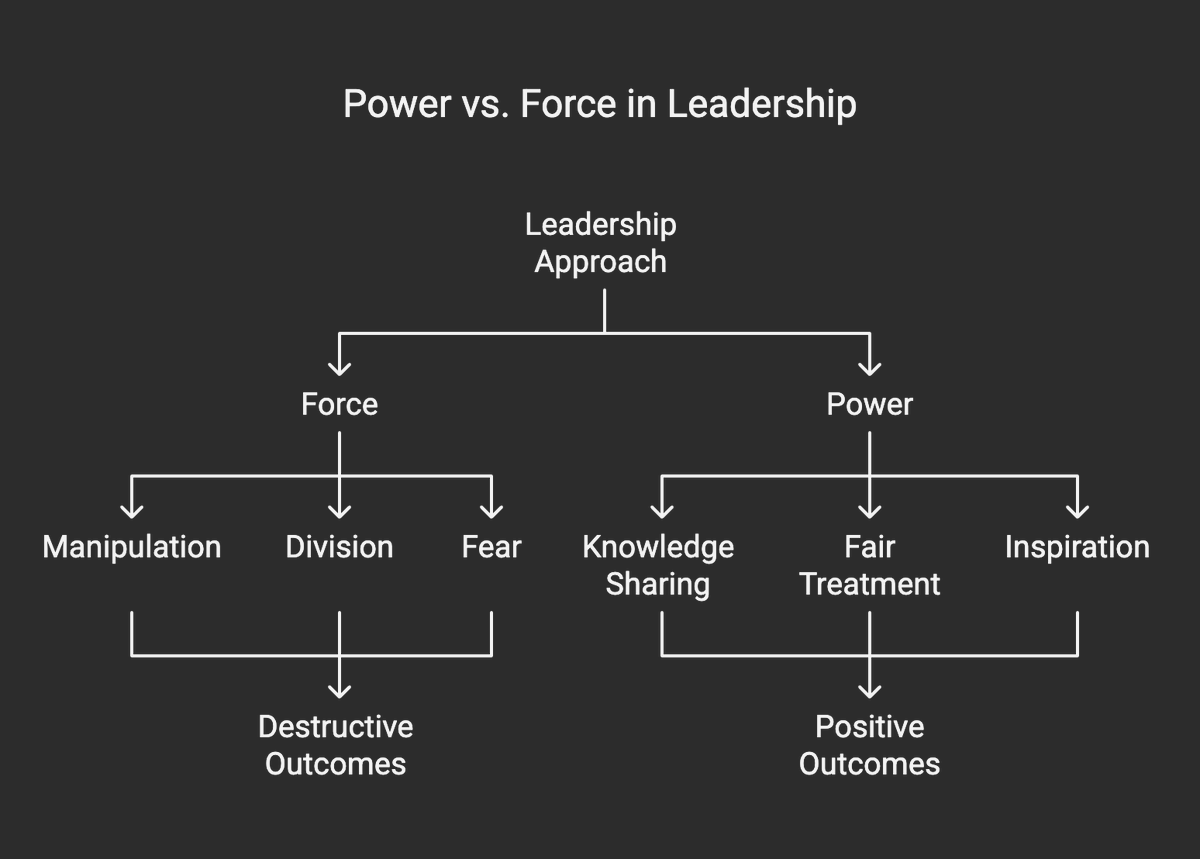
In crypto specifically, founders using force often micromanage decisions they don’t fully understand, play team members against each other for attention, or create information silos to maintain control.
Why This Matters Especially for Crypto Founders
Your startup operates in an industry built on principles of decentralization and transparency. The contradiction of running a centrally-controlled, politically toxic organization while building decentralized products creates:
- Cognitive dissonance – Your team loses faith in your mission
- Innovation barriers – Politics discourages risk-taking and creative thinking
- Talent exodus – The best developers and designers have options and won’t tolerate toxicity
- Execution failures – Political environments prioritize appearances over results
Practical Ways to Build a Politics-Free Crypto Startup
1. Embody Transparency
Make your decision-making as transparent as your chain. When transparency isn’t possible, explain why. This prevents the rumor mill that fuels politics.
2. Distribute Knowledge
Knowledge hoarding is politics fuel. That DevOps guy who’s the only one who knows how the deployment pipeline works? He’s sitting on a throne of power. Fix this with regular knowledge-sharing sessions, basic documentation of critical systems, and by rewarding those who make themselves replaceable rather than irreplaceable. When information flows freely, power games lose their oxygen.
3. Manage Conflict Directly
When tension arises (and it will):
- Address it immediately
- Have direct conversations
- Focus on interests, not positions
- Look for win-win solutions
- Document agreements
4. Align Incentives
Design roles and rewards that make team success the path to individual success. When someone can only win if their colleague loses, politics is inevitable.
5. Model What You Want
As founder, you set the tone. If you gossip, others will. If you blame, others will. If you hoard information, others will. Your behavior is your culture’s blueprint.

The Counseling Framework
When negative politics do emerge, use this simple three-step approach:
- Start with casual conversation – “I’ve noticed some tension around the latest feature prioritization. What’s your perspective?”
- Get specific about expectations – “When we disagree on technical direction, I expect debates to focus on data and user needs, not personal criticism.”
- Address underlying needs – “I sense you want more influence over product direction. Let’s discuss how you can lead the next feature exploration.”
The Power Test
Not sure if you’re building with power or force? Ask yourself:
- Do people contribute because they want to or have to?
- When you’re not in the room, does work quality improve or decline?
- Do team conflicts get addressed openly or fester underground?
- Is information flowing freely or carefully controlled?
- Are your best people energized or exhausted?
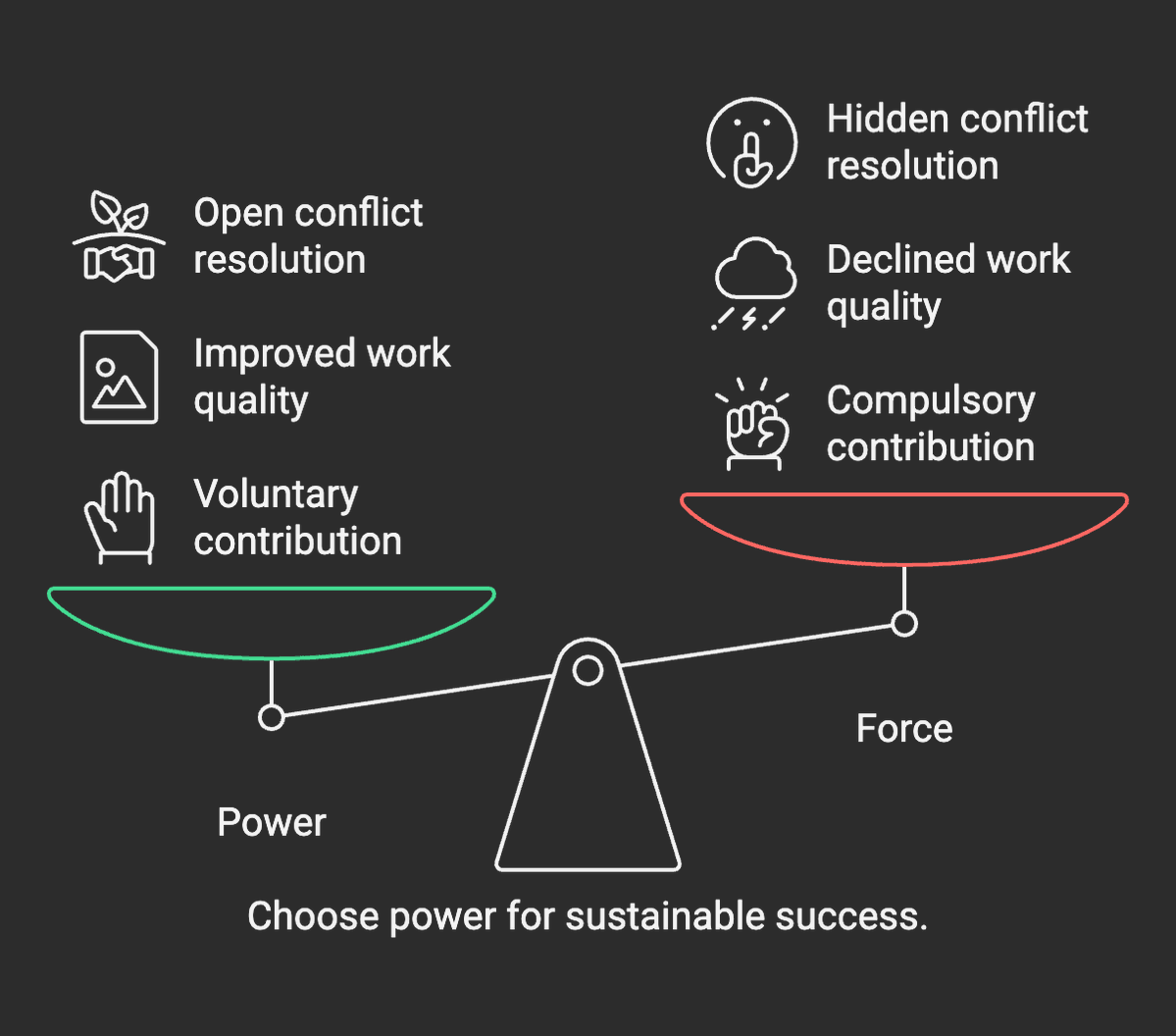
If you’re still reading this, you’re probably not the schlub running a dystopian crypto sweatshop. But maybe…just maybe…you’ve caught yourself playing political Tetris instead of building something that matters.
If your shop runs on passive-aggressive Slack messages and strategic calendar invites, you’re not revolutionizing finance….you’re just LARPing corporate America with extra steps and cooler stickers on your laptop.
The irony is thick enough to mine: building trustless systems while fostering environments where nobody trusts each other. <aint_nobody_got_time_for_that.gif>
Yup. I just gave you a one-way ticket to introspection. Try not to redeem it too fast.
Watch your back (or better yet, watch your culture).
 virality engineering hub
Leave a comment